Chapter 1: Where It All Began
This is going to be different than the blogs I’ve posted on this website in the past. In fact, it’ll probably more closely resemble my journal. Thus, as you could assume, this will not be co-created with AI. I would just love to put that out there. This will relay my experience as a 21-year-old white woman voting for the first time in a historically blue state while attending a progressive school. Most distinctly, this will describe my heartbreak. Potentially the worst heartbreak I’ve ever experienced.
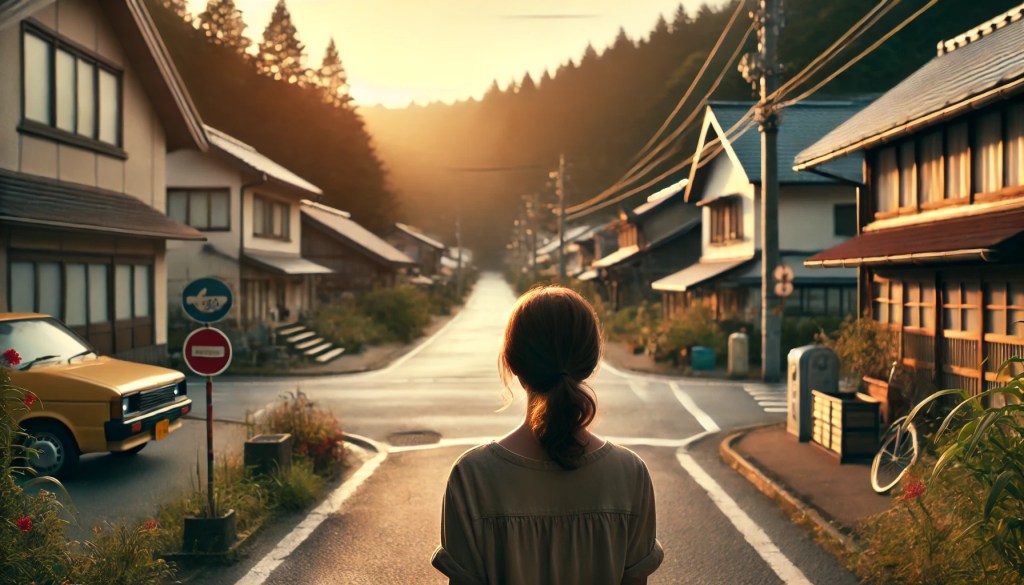
To understand this heartbreak, you need to understand where my relationship with politics started. There’s a lot of history here, so we have to go way back. I grew up in Philomath. Have you heard of it? I wouldn’t bet on it. It’s not teeny, but it’s not large by any definition of the word. The population is less than 6,000, and my graduating class was no more than 120. It’s just a small town in Oregon. I love it, though; please don’t get confused. I love it because it’s my home. This small town holds two very important things to me: my family and my childhood—both of which make me the person I am today. However, as most children fall victim to, I mindlessly inherited the political perspectives of those I was most immediately surrounded by. Funny thing is: I felt a constant battle with this ideology. I claimed it to be mine because I couldn’t imagine, at the end of the day, disagreeing with these people on paper. In my heart, though, I knew it wasn’t something of my own, and I showed that time and time again as I tried to rebute my father’s arguments starting at age 10.
I remember the exact evening I realized that, no matter how hard I tried, I am simply not a Republican. I was in 7th grade, and I was hanging out with my best friend at the time, whom I still love by the way. [I went to her wedding last year.] We were gabbing about politics. Silly, isn’t it? Two 12-year-old girls chatting so unseriously about something so serious. This version of me wore space-printed leggings, obsessed over rainbow loom bracelets, jammed out to Twenty One Pilots, and thought I was truly one of a kind because I watched The Office before the rest of my grade learned about it. I didn’t know much. But I did know, in that moment, when my friend started dissing and belittling feminists, that I did not and could not agree with her. And maybe [just maybe] this gut feeling that I constantly had to defend feminists was not just because I love to play devil’s advocate [which, by the way, I do not]. This gut feeling was actually screaming to tell me that I am a feminist. Shocker. Who. Would. Have. Guessed. Thank God I listened. I remember sitting on her couch, searching the definition of feminism and realizing that, in spite of all that I had known, I was, in fact, a feminist.
It felt like Plato’s Cave. I had finally realized where those shadows were coming from, and I was so much closer to the truth. I felt relief! This strange internal conflict I constantly put upon myself was finally resolved. I felt the need to let everyone know about it too. After following multiple feminism-grounded Instagram accounts, I started looking up how to protest, how to donate, and what books I needed to read about the cause. I believe I stole my sister’s “FEMINIST AF” shirt promptly two months later. From then on, I branded myself as a Democrat and a liberal. This felt big for me in Philomath. I was so openly known by this characteristic that I got asked to write the democratic piece for my school’s yearbook. I felt truly honored. Nervous too. Politics, at least at the time, still felt pretty taboo to speak about, especially when regarding left-winged views. Plus, there are about a million misconceptions about us. I doubted that anyone would take the time to read this page, but just in case, I needed these words to count. I would say, in hindsight and without my knowledge at that moment, this was the birth of my passion for political PR.
Lucky me. I read it again, just moments ago, and I am still proud of what I wrote at 17 years old. Crazy timing, too: it mentions Kamala Harris in the first two sentences. For context, our yearbook director asked me specifically, “What does being a Democrat mean to you?” I responded with four large paragraphs (and forgive past me for any grammar mistakes), starting with,
“Identifying as a Democrat means to me standing up for others when they cry for help in times of injustice. It means breaking glass ceilings, just as Ruther Bader Ginsburg and Kamala Harris have done. It means that hoping and fighting for the progression of our country from the racism that it was built on to a nation of opportunity. It means that although it is important to appreciate what our past and present leaders have done to advance our society, it is equally, if not more, important to note the flaws of it and work until our nation truly is one of equal opportunity.”
Funny reading that now. Not “funny” in a haha way but funny in a wow-I-can’t-believe-the-birth-of-my-passion-is-so-integrally-tied-to-the-rebirth-of-it kind of way. Classic really. I think I’m getting ahead of myself though. I haven’t even touched on the supposed “death” of this passion. Let us take a moment and realize the exact place in time in which I wrote that piece: the autumn of 2020, midst COVID-19 lockdown, during the 2020 election, sitting alone in my room, ready to fight for justice, with little means [I couldn’t even vote yet] and only the support of those who politically agreed with me whom I witnessed online. Yet, despite it all, a fire burned inside of me. A fire for justice and love and overwhelming empathy.
You might imagine that going to a university with like-minded individuals would fuel this fire even more. Tragically, unexpectedly, and pathetically, for three years, it barely did a thing.
 Chloe Jurva
Leave a comment